
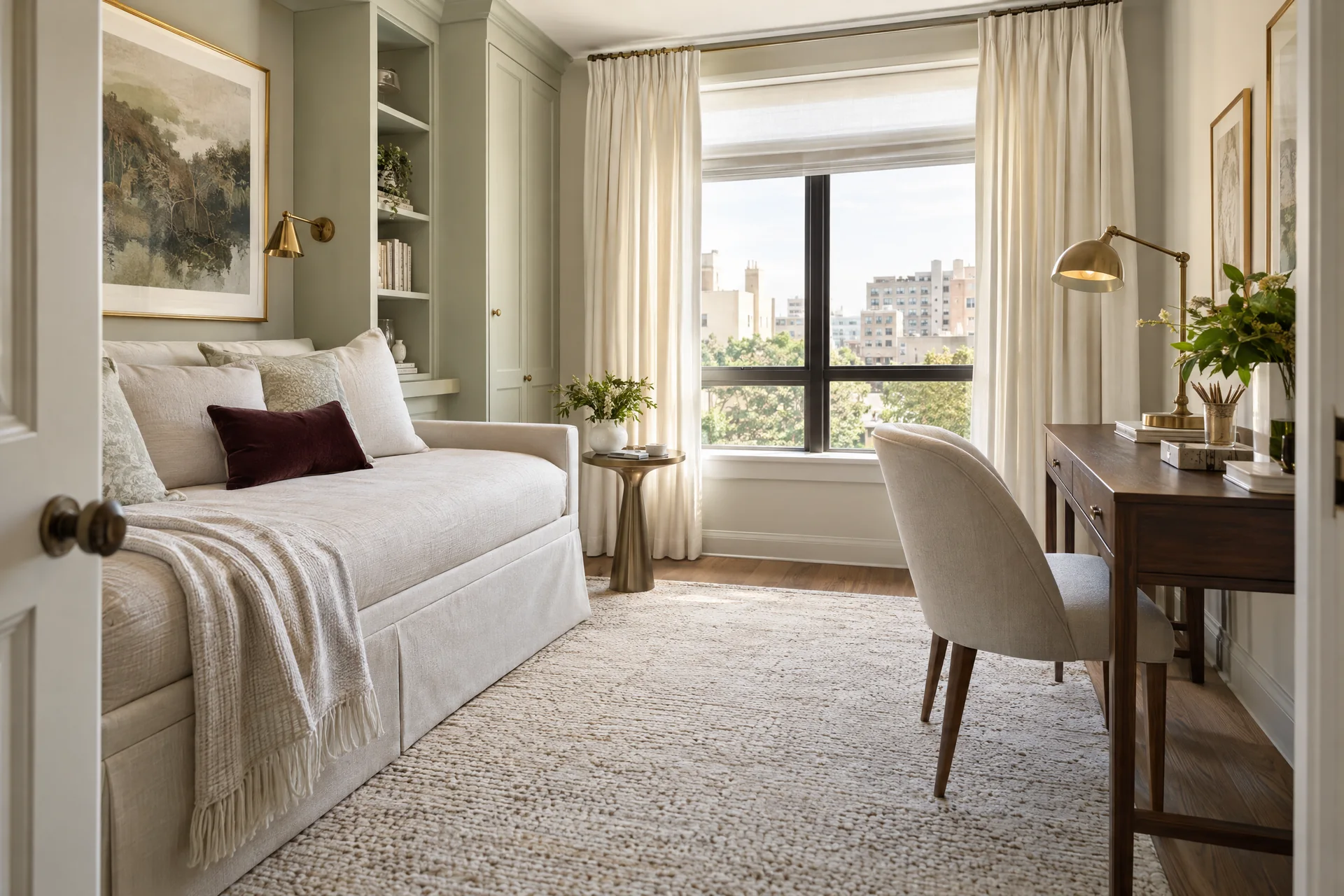
Begin with the task
Think about where you read, prepare food, get dressed and move through the home. Each activity asks something different of the light. A shaded lamp can make an evening feel comfortable, but it may not provide enough light for a detailed task.
Build more than one layer
General light helps you see the room. Task light supports an activity. Smaller pools of light can draw attention to artwork or give a corner warmth. You do not need many fixtures, but each one should have a purpose.
Notice glare as well as brightness
An exposed bulb or a bright reflection can make a room less comfortable. Look at a light from the position where you will use it. Consider shades, placement and controls together. Try the room in daylight and after dark before deciding it is finished.
Make the controls useful
A good light should be easy to reach and simple to use. Dimmers can help the same room work for different moments, provided the lamps and controls are compatible. An electrician can advise on installation where wiring or switches need to change.